
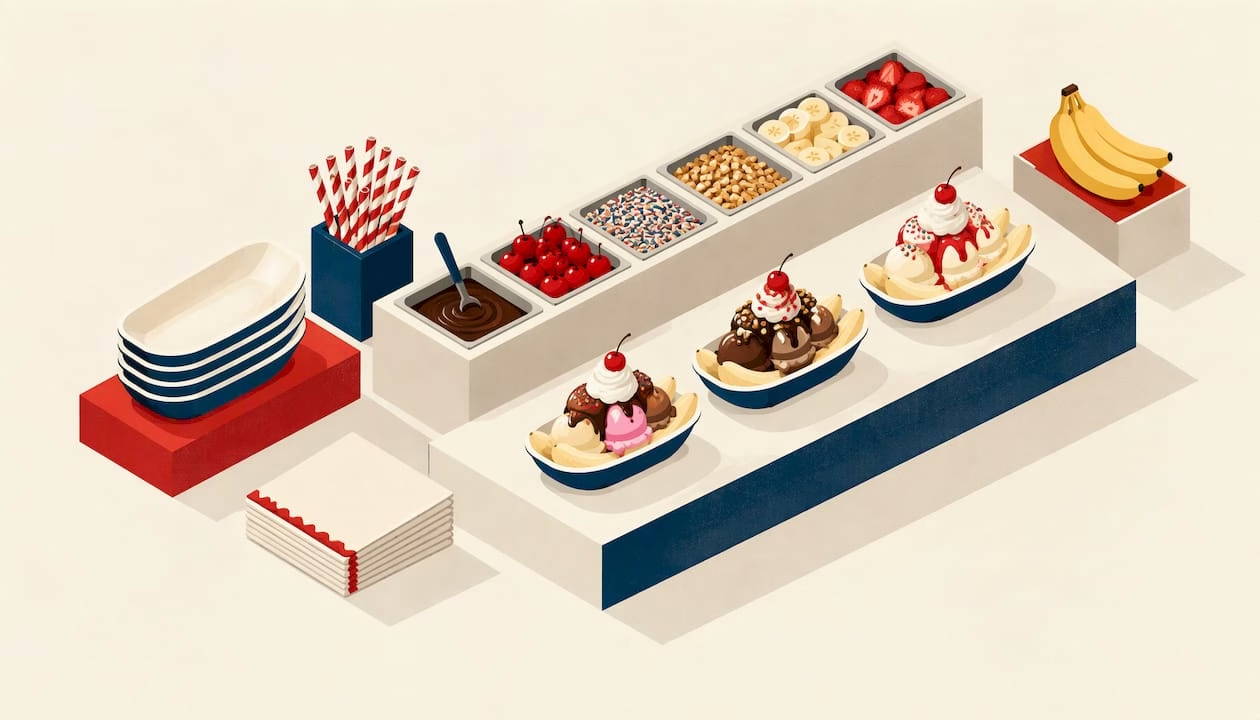
A banana split bar is a self-serve dessert station where guests build their own splits from banana halves, ice cream, sauces and toppings. It works because everyone gets the dessert they want, and it works best when the ice cream stays frozen, the toppings are labeled and the line moves. That is a bigger job than it looks at a 60-person birthday, wedding or office party, which is why many Ontario hosts book it as part of an ice cream truck rental, where banana boats are on the menu. Below is how a good bar is built, what it needs, and where the details go wrong.
TL;DR
- A banana split bar needs bananas, ice cream, sauces, whipped cream, nuts and cherries, set out in the order guests use them, from dishes to spoons.
- Plan toppings by the spoonful: for 12 guests, about 1.5 cups of crushed peanuts covers 2 tablespoons per sundae.
- Label every item for allergens and keep nuts, dairy and gluten clearly separated.
- In Ontario, food meant to stay frozen must stay frozen until served, so the freezer plan matters as much as the toppings.
- We bring banana boats, popsicles, soft-serve and organic and kosher topping options to birthdays, weddings, corporate events, school functions and fundraisers across Ontario.
Table of Contents
- What a banana split bar actually is
- The classic build: what goes on the table
- Building it in the right order
- How much to buy
- Keeping it frozen and safe in Ontario
- Allergies and dietary needs
- Popsicles and banana boats as add-ons
- Which event, which format
- Our perspective
- Book the banana split bar for your event
- FAQ
- Sources
What a banana split bar actually is
The classic banana split is a banana cut lengthwise and topped with ice cream, sauces, whipped cream, nuts and a cherry. It was traditionally served in a long dish called a boat, which is where the name banana boat comes from. A bar turns that single dessert into a station: guests take a dish, a banana and scoops, then add what they like and skip what they do not.
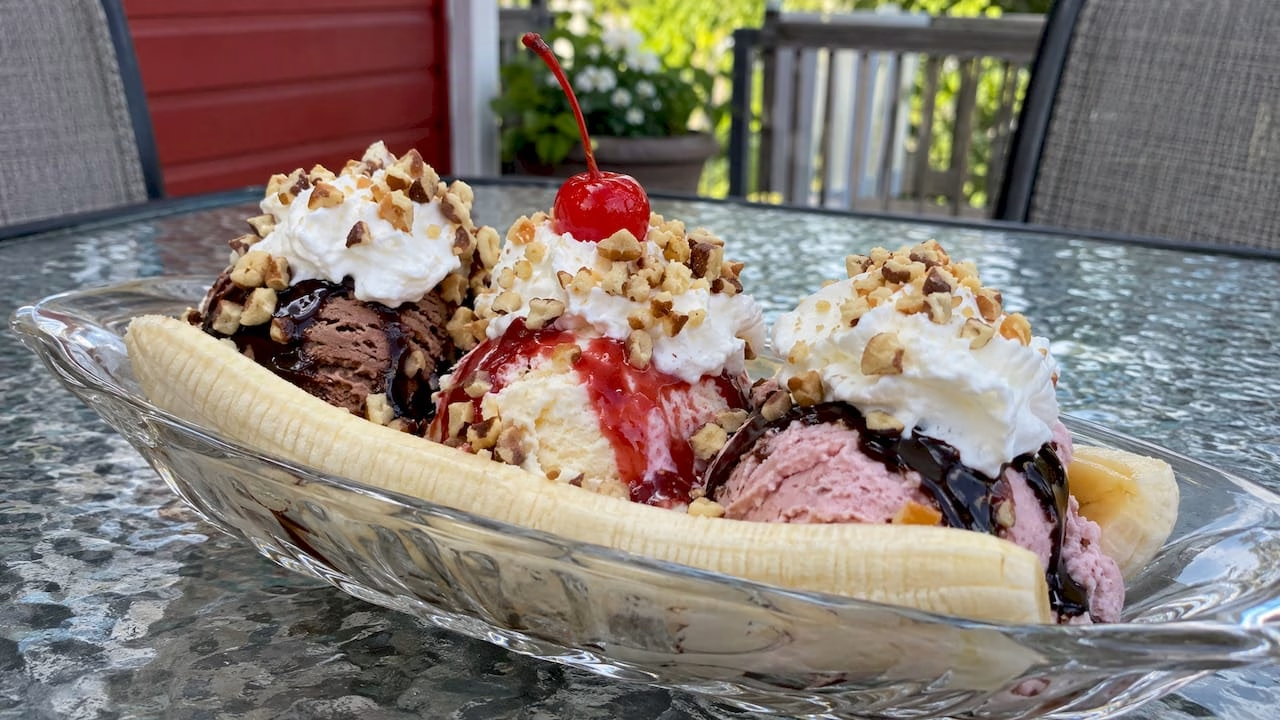
That flexibility is the appeal. One food writer describes the format as a customizable alternative to a pre-made split, since guests choose the toppings. For a mixed crowd of kids, grandparents, colleagues or wedding guests, that is the difference between a dessert most people enjoy and one everyone does.
There is also a baked cousin. Some party hosts make a layered, no-bake banana split dessert in a 9×13 pan with graham cracker crumbs, ice cream, hot fudge and sliced bananas, frozen for about an hour. That is a cut-and-serve square, not a bar where guests assemble their own. This article is about the build-your-own station.
The classic build: what goes on the table
Serious Eats says the only mandatory ingredients of a banana split are bananas, ice cream, whipped cream, cherries and at least one sauce. Everything else is choice. A full bar built on that foundation looks like this:
| Layer | Classic choices | Notes for a crowd |
|---|---|---|
| Base | Banana halves, vanilla, chocolate and strawberry ice cream | The classic split uses three ice cream flavors |
| Sauces | Chocolate, caramel, strawberry, pineapple | Hot fudge or caramel can double as a dairy flag |
| Crunch | Chopped walnuts, pecans, pistachios, slivered almonds | A home banana split party typically offers several nuts |
| Finish | Whipped cream, marshmallow creme, maraschino cherries | One cherry per scoop is the traditional look |
| Serving | Boats or bowls, spoons, scoopers | Set out in the order guests use them |
Two small decisions change how the dessert tastes. Serious Eats recommends going easy on sugar: lightly sweetened whipped cream and simple toasted nuts keep the dessert from becoming a wall of sweetness. And for texture, one recipe site suggests cacao nibs, coconut flakes and chia seeds alongside the usual toppings. If you are deciding between chocolate chips and something with more bite, this comparison of cacao nibs versus chocolate chips helps you balance flavors.
Building it in the right order
Guests will follow whatever sequence the table suggests. Arrange the bar in the order ingredients are used, starting with dishes and ending with spoons. In practice:
- Dishes and boats at the very start, so nobody is holding a full dish while reaching for a banana.
- Bananas, halved lengthwise just before the event, so they do not brown.
- Ice cream, the one item that must be served cold and fast.
- Sauces, then crunchy toppings, then whipped cream and cherries.
- Napkins and spoons last.
Put the bar against a wall rather than in a walkway. Event planning guidance for stations at receptions advises placing them away from traffic paths and budgeting about 1.3 times a normal portion, because guests tend to eat more at interactive stations than you expect. The same source suggests opening four or more stations when guests are mingling, which is a useful rule for a wedding or a holiday party: a single dessert table with one scooper becomes a queue.
How much to buy
Quantities are where home-built bars most often fail. A few anchor numbers:
- Bananas: one per guest, plus a few spares. Halving them just before service avoids brown edges.
- Ice cream: three scoops per split is the classic, so plan for one to two scoops per guest if you are offering other desserts too, and expect people to come back.
- Nuts: one guide recommends 1.5 cups of crushed peanuts for 12 guests, or 2 tablespoons per sundae, crushed just before serving. Scale that for your headcount.
- Sauces: at least three, each with its own spoon or pump.
- Whipped cream and cherries: more than you think. They are the first things to vanish.
The same guide groups a bar into base ingredients, boost layers and finish touches, a good way to check you have not forgotten a category. As its author puts it, the point is having the right ingredients in the right quantities, not a complicated menu.
Keeping it frozen and safe in Ontario
Ice cream is the part of the bar that cannot wait. Ontario’s food premises regulation, O. Reg. 493/17, spells out the principles that apply to any operator serving food to the public: potentially hazardous food must be kept at 4°C or lower or 60°C or higher, food meant to be kept frozen must stay frozen until it is sold or prepared for use, and ice used in food or drink must be made from potable water and handled in a sanitary way. The same regulation requires a trained food handler or supervisor on site during every operating hour of a food-service premise.
City of Hamilton public health guidance gives the working numbers: frozen foods at -18°C or colder, dessert carts in public areas fitted with sneeze guards, and bulk ice cream scooped with a dipper that sits in running water. Those are rules for businesses, but they describe good practice for any host: keep tubs in a freezer until the moment of service, scoop from a small number of tubs at a time, and never refreeze melted ice cream.
General catering guidance adds the logistics: a detailed timeline for delivery, setup, service and cleanup, enough plates and utensils, and cooling equipment that can actually hold temperature. A home freezer and a few coolers rarely cover an outdoor wedding in July.
This is the main reason hosts book a truck instead of building the bar themselves. A truck is a freezer on wheels, so the cold chain is part of the vehicle rather than a problem you solve in a rented hall kitchen.
Allergies and dietary needs
A bar full of shared scoops, nuts and sauces is an allergy risk if it is not managed. Food Allergy Canada’s guidance for caterers recommends ingredient signs beside each item, keeping allergen-safe foods separate, using covered or pre-packaged condiments, replacing contaminated utensils immediately and inviting allergic guests to serve first.
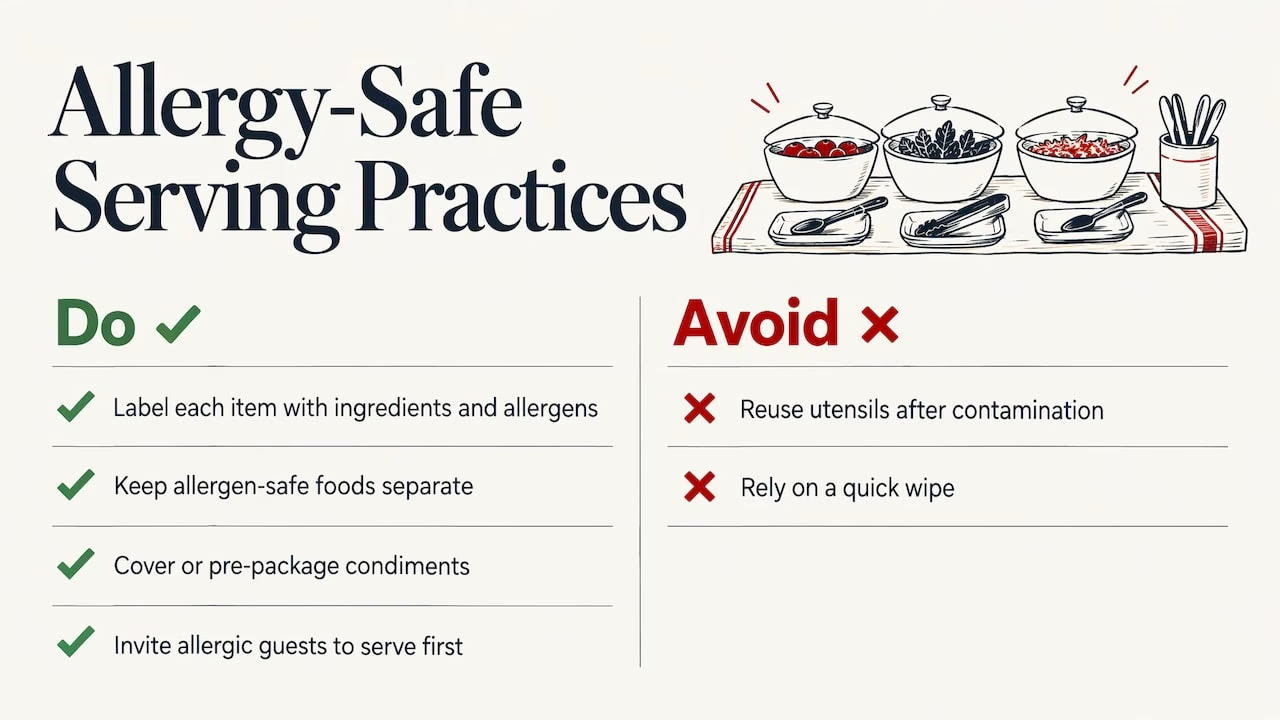
For the toppings, a Canadian toppings guide flags the usual suspects: peanuts and tree nuts (use dedicated dispensers and clear labels), dairy in most caramel, whipped cream and chocolate sauces (a flag for vegan and dairy-free guests), and wheat in cookie pieces (a flag for guests with celiac disease). Food safety training material also notes that allergen proteins are not destroyed by cooking or cooling, so a quick wipe is not enough; use clean, sanitized utensils for each item.
On the planning side, a university accessibility guide suggests asking about allergies and restrictions on the registration form, including vegan, gluten-free, halal, kosher and dairy-free needs, labeling items with ingredients and allergens, and leaving at least one metre of clearance around buffet-style setups for wheelchair users. For school events and corporate parties, that RSVP question is the single most useful step. We offer organic and kosher topping options, so those needs can be built into the menu from the start.
If a guest has a severe allergy, speak with them or their family before the event about what will be safe, and let them take their dessert first.
Popsicles and banana boats as add-ons
A banana split bar does not have to be the only frozen treat. Popsicles are the easy second option: they are individually wrapped by nature, they suit guests who want something lighter, and they can serve dairy-free guests when made with fruit. In Canada, a popsicle maker has described the product as time-sensitive: frozen treats have to reach the event quickly, which is the same constraint you face at your own party.
Our menu covers soft-serve, sundaes, floats, milkshakes, popsicles and banana boats, with customizable toppings. If you want the split-bar experience plus something for guests who do not want a sundae, the menu can be mixed within one booking.
Which event, which format
Birthday parties. Kids want to build their own, and parents want it fast and tidy. A bar with bananas, two ice cream flavors, three sauces and sprinkles is plenty. Keep nuts to a separate, labeled corner or leave them out. See our birthday party trucks.
Weddings. Guests mingle, so open more than one serving point and keep the bar off the dance-floor route. The wedding stage is also long: a dessert that runs out at the first rush is a letdown. Our wedding truck page shows how couples use it, and booking early is worth reading about in this planning guide.
Corporate and office events. Staff drift in and out, so speed and labeling matter more than elaborate toppings. A smaller topping set with clear allergen cards works best. We cover this on our corporate events page.
Schools and fundraisers. Allergy rules are strictest here, and the line is the longest. Choose a simple, labeled menu and agree on it with the school ahead of time. Our fundraiser page explains how events like this raise money.
Our perspective
A banana split bar looks simple, and that is the trap. The bananas, the sauces and the cherries are easy. What decides whether guests love it is whether the ice cream is still perfect at the end of the line.
That is why we think the best banana split bar is one that arrives with its own cold. At Classic Cone, we are a family-owned Ontario business, and our focus is customer satisfaction and community connection at parties, weddings and corporate events. Our menu includes banana boats, sundaes, soft-serve, floats, milkshakes and popsicles, with customizable toppings including organic and kosher options.
We build rental packages around the event: the headcount, the mix of kids and adults, and the dietary needs on the guest list. Whether it is a school function or a wedding, the goal is the same: a dessert guests remember, with a host who is free to enjoy the party.
the author
Book the banana split bar for your event
If you would rather enjoy your own party than guard a freezer, our banana split catering service brings banana boats to birthdays, weddings, offices, schools and fundraisers across Ontario. You can also browse all of our ice cream truck rentals and tell us about your guest count, menu wishes and any dietary needs.
Tell us the date, the location and the number of guests, and we will shape a package around it. Our offers carry no published prices, so ask us for a quote that fits your event.
FAQ
What do you need for a banana split bar?
At minimum: bananas, ice cream, whipped cream, cherries and one sauce. Most hosts add three ice cream flavors, several sauces, chopped nuts and marshmallow creme. Do not forget dishes, spoons, napkins and a way to keep the ice cream frozen until serving.
How many guests can a banana split bar serve?
There is no fixed limit, but the line is the constraint. For larger groups, open more than one serving point; event guidance suggests four or more stations when guests are mingling. Tell us your headcount and we will plan the setup around it.
Can a banana split bar work for guests with allergies?
Yes, with planning. Label every item, keep nuts, dairy and wheat toppings separate, use clean utensils for each, and let guests with allergies serve first, as Food Allergy Canada recommends. Ask about dietary needs when you send invitations.
Can I get banana boats and popsicles at the same event?
Yes. Our menu includes banana boats, popsicles, soft-serve, sundaes, floats and milkshakes, and a package can combine them. Contact us through icecreamtruck.ca with your event details.
Sources
- The Nibble: banana split history and party guide
- Spoon University: Banana Split Bar
- Aberdeen Magazine: Banana Split Bars recipe
- Serious Eats: Banana Split Recipe
- The Spruce Eats: Classic Banana Split Ice Cream Sundae
- Cacao nibs versus chocolate chips
- Event planning: catering styles and dietary planning
- Flavor Cues: banana split bar ingredients
- Ontario O. Reg. 493/17 Food Premises
- City of Hamilton: food premises and food handling
- Event catering essentials
- Food Allergy Canada: tips for food catering
- Toppings guide for Canadian cafes
- Allergen management for food businesses
- SFU Public Square: food and catering accessibility
- The Ismaili Canada: Delivering Popsicles in the Pandemic