

An ice cream float bar works because guests build their own drink: scoops of ice cream, a fizzy soda, a few toppings, done in under a minute. It also asks more of you than it looks. You need the right pairings, a way to keep ice cream hard for hours, enough glasses and straws, and a plan for allergies. If you would rather not run a freezer, a scoop station and a cleanup crew yourself, a float catering service from an ice cream truck brings the cold storage, the menu and the serving to your event. Below is everything you need to plan the bar well, whichever way you go.
TL;DR
- A float is ice cream plus soda; an ice cream soda uses flavoured syrup and carbonated water. Both work on a self-serve bar.
- Stock two or three ice cream flavours and three or four sodas. Mild sodas let richer ice cream stand out.
- Ice cream stays safe at -12°C to -14°C, and cold food at 4°C or below. Bring the tubs out last.
- Offer a dairy-free option with its own scoop, and keep nut toppings at the far end of the table.
- At a larger Ontario event, serving food may involve a health unit application and a certified food handler. Our truck handles the cold chain and service with floats on the menu.
Table of Contents
- What an ice cream float bar is
- Choosing ice cream and soda pairings
- Toppings that earn their place
- How much to plan for
- Setting up the bar
- Keeping ice cream from melting
- Food safety at an Ontario event
- Why a truck can be the better float bar
- Book a float bar from our trucks
- Our view on float bars
- FAQ
- Sources
What an ice cream float bar is
A float bar is a table, or a truck window, where guests assemble their own float. The classic is vanilla ice cream in a tall glass with root beer poured over. According to Eater’s ice cream glossary, the float dates to Philadelphia in 1874, when Robert McCay Green reportedly ran out of cream for his cream sodas and used scoops of ice cream instead.
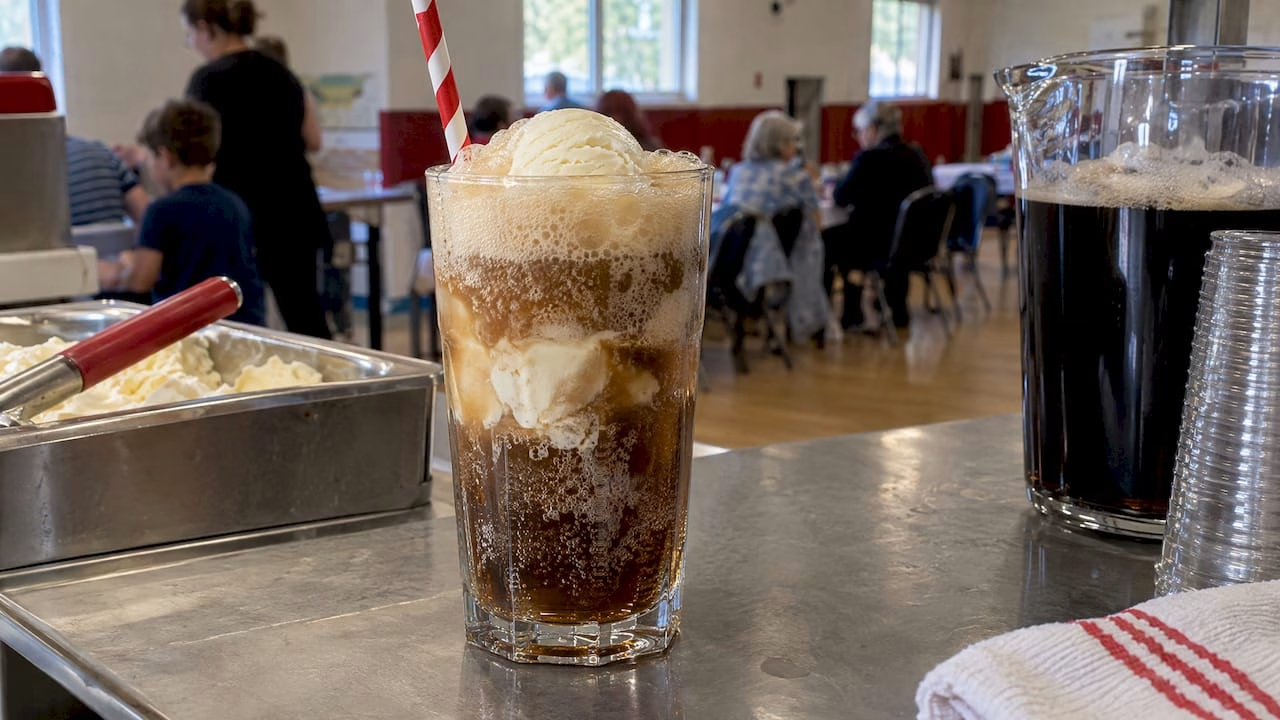
The terms get mixed up, so here is the practical difference. A float generally pairs ice cream with a ready-made soft drink, usually root beer. An ice cream soda is built from flavoured syrup, carbonated water and ice cream, as Wikipedia’s entry on ice cream floats explains. For a party, you will mostly serve floats because bottled soda is easier than syrup and a soda siphon.
A sundae bar is the cousin you may have seen more often: ice cream in a bowl with sauces and toppings. A float bar swaps the bowl for a tall glass and adds the fizz, which makes it feel more like a drink station and less like dessert. That matters at weddings and office events, where guests are often holding a drink anyway.
Choosing ice cream and soda pairings
The most common mistake is stocking five sodas and one ice cream. The better rule is the reverse: a short list of ice creams and a handful of sodas, chosen so most combinations taste good.
Tasting Table’s pairing guide suggests these matches:
| Soda | Ice cream or frozen dessert |
|---|---|
| Root beer | Vanilla or blueberry |
| Cherry soda | Almond |
| Orange soda | Chocolate |
| Cream soda | Strawberry |
| Pineapple soda | Coconut |
| Lemon-lime soda | Rainbow sherbet |
| Watermelon soda | Lime sorbet |
Its logic is useful for planning: neutral sodas such as cream soda and lemon-lime act as a backdrop that lets more complex ice creams shine, while a strong flavour like chocolate can overpower a light soda. So if you only want two or three ice creams, start with vanilla, add a fruit flavour such as strawberry, and add one dairy-free option such as sorbet.
Three starter menus
- Birthday party: vanilla ice cream, strawberry ice cream, root beer, cream soda and orange soda. Kids will mix their own anyway.
- Wedding: vanilla and a sorbet with sparkling lemon-lime or sparkling fruit water, so the drinks look elegant in tall glasses.
- Office or school event: vanilla and chocolate with cola, root beer and a lemon-lime option, so the choice is familiar and fast and the line moves.
If you want a themed float, a Black Forest version with chocolate syrup, black cherry ice cream and blackberry sparkling water is one example from Sobeys’ float ideas, along with a lemon pie float and a piña colada float built on coconut ice cream.
Toppings that earn their place
Toppings are what make guests feel the bar is theirs. They should be easy to pick up with a spoon and safe to leave out for a while. Whipped cream and a maraschino cherry are the classic finish. Add three or four of these:
- Sprinkles or mini chocolate chips
- Crushed cookies or waffle cone pieces
- Fresh berries or mint
- Caramel or chocolate sauce
- Toasted coconut
Keep each topping in its own small bowl or jar with its own spoon. Nuts need special handling, covered below. For a sweeter or more indulgent look at a wedding, sauces in small pitchers add a finish without adding mess.
How much to plan for
Plan from the drink outward. Each guest will usually have one float, and the hungrier ones go back for a second.
A worked example: for 40 guests, with two scoops per float and about one float each, you need 80 scoops. Allow for a second round from roughly a third of the group and you are near 105 scoops, which is a few litres of ice cream split across your flavours. Soda follows the same pattern: a float needs a glass of soda, so budget one glass per guest per round plus a little for spilled pours. Round the soda up, since bottles keep and melted ice cream does not.
Hot weather lowers appetite for food but raises the demand for cold drinks, so float bars do well in summer. If you are unsure, keep a reserve of your two most popular items in the freezer rather than padding every flavour.
Setting up the bar
Set the table up in the shade and away from direct sunlight, with a water-resistant cover. Lay it out in the order guests build the float:
- Glasses, jars or cups at the start of the line.
- Ice cream, kept in ice or a cooler. Ready-scooped portions are the fastest option.
- Sodas, chilled in a tub of ice, with a bottle opener.
- Toppings, each with its own spoon.
- Straws, long spoons and napkins at the end, plus a bin close by.
One trick that speeds up a crowd: pre-scoop ice cream into glasses or small jars and hold them in the freezer or an ice bucket, so guests only pour soda and add toppings. Julie Blanner’s float bar guide describes two scoops per glass held in an ice bucket until service, which keeps the line short and the table tidy.
For schools and offices, assign one person to stand at the ice cream and scoop. It controls portions and keeps hands off the shared tubs.
Keeping ice cream from melting
Melting is the main reason home float bars go wrong. Three habits matter most.
Sequence it. Set everything else up first and bring the ice cream out last, shortly before service.
Keep it in ice. Lindt Canada’s sundae station guide recommends pre-scooping and freezing portions before the party, replenishing from the freezer as needed and building an ice bath or ice box into the display.
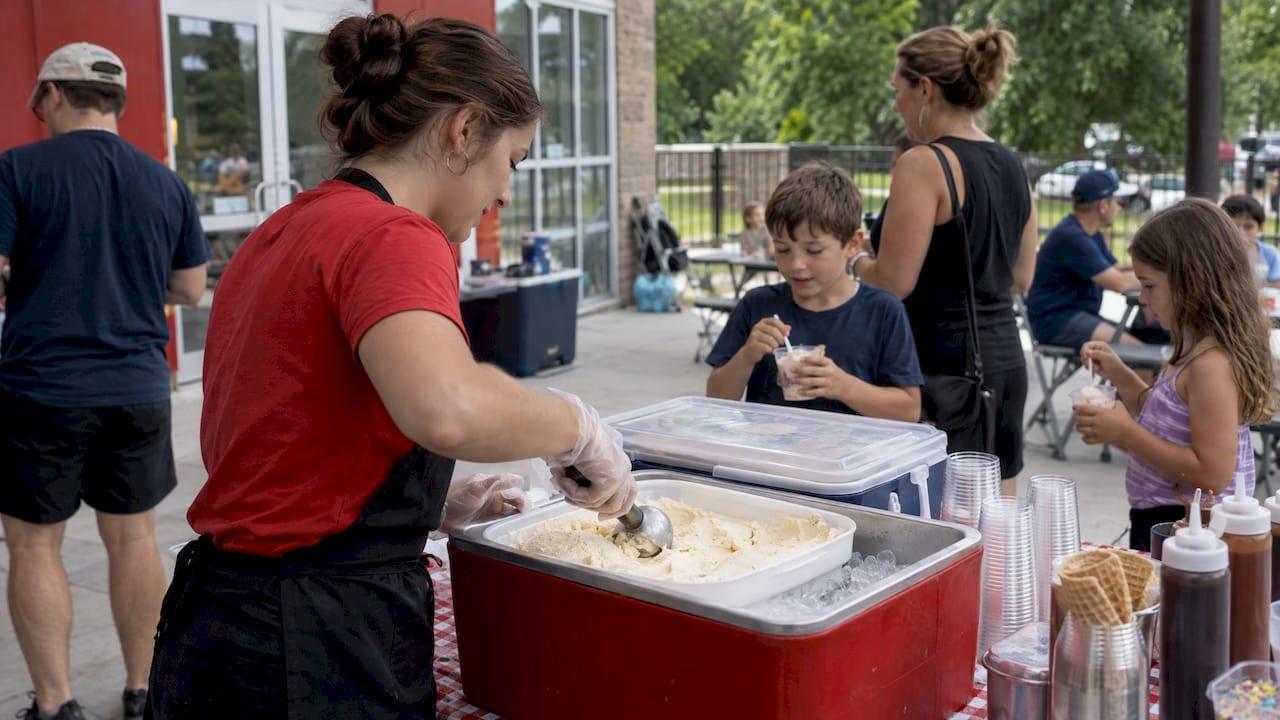
Rotate in small batches. Keep large tubs in the freezer and bring them out one at a time, so only what is being served is exposed.
This is where a home freezer and a cooler start to feel small. A 60-guest wedding or a school day with several classes cycling through needs far more cold storage than most households own. A truck carries its own freezing and serving equipment, so you are not borrowing space in a venue kitchen.
Food safety at an Ontario event
This part matters most for weddings, school events, fundraisers and public gatherings, where you are serving people you do not know well.
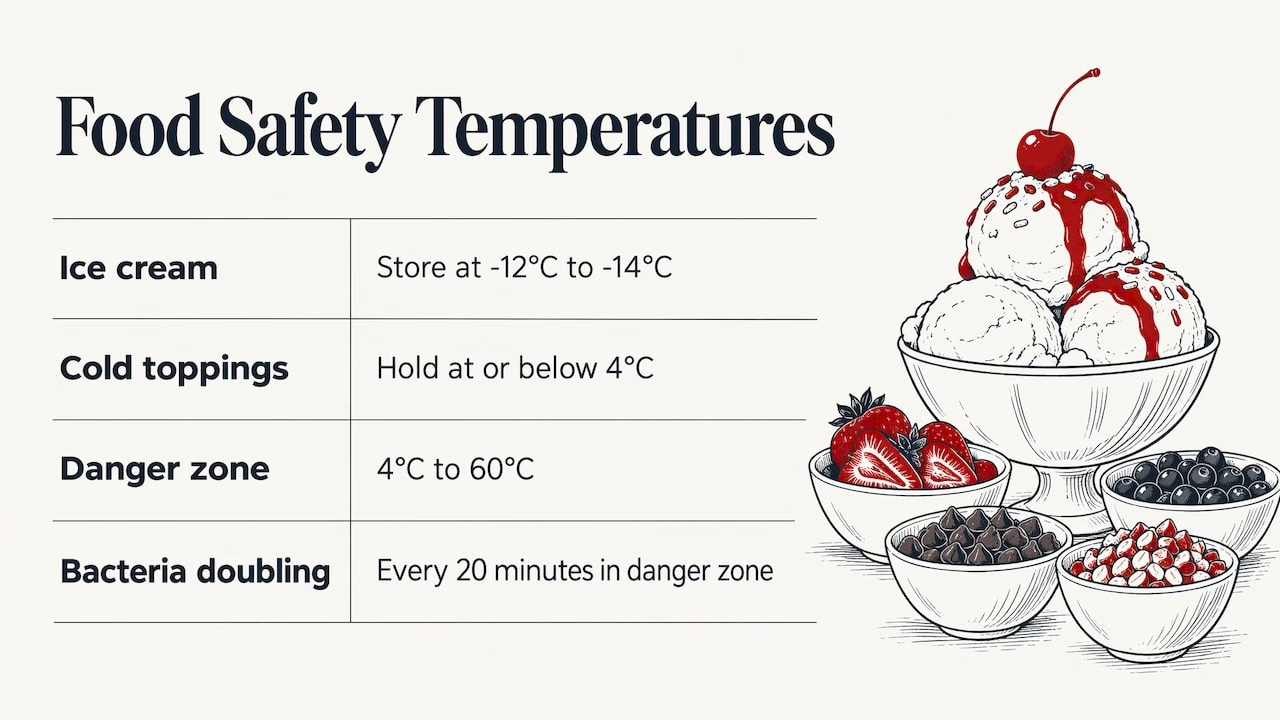
Temperatures. Food Safety Canada’s guide to potentially hazardous foods says to store ice cream between -12°C and -14°C where possible, and to keep scoops in cold running potable water between serves. Cold foods such as whipped cream and milk-based toppings should be held at 4°C or below.
Scoops. The same guide advises keeping ice cream and sorbet scoops separate, because some guests will pick sorbet because of a dairy allergy.
The danger zone. The Region of Durham’s special events requirements describe the 4°C to 60°C range as the zone where bacteria double every 20 minutes. Food left in it for long, such as a bowl of whipped cream in the sun, is the risk to watch.
Permits and staffing. Public health rules apply when food is served at a public special event. The City of Toronto, for instance, requires a certified food handler on staff at all times for vendors, along with potable water for hand washing, under its special event food vendor rules. The Region of Durham asks event coordinators to apply at least 45 days ahead and food vendors at least 30 days ahead, and the Region of Peel publishes its own guidelines that also call for a certified food handler on site. Rules differ by health unit, so check with yours early. A private party in a home or a rented hall usually raises fewer questions than an open school fair or fundraiser, but ask the venue or your local public health unit if you are unsure.
If your own volunteers or staff will serve food at a larger event, training matters. Online food handler certification courses cover the basics of safe food service and are designed for teams.
Allergies and dietary needs
Post a list of ingredients for every ice cream and soda. Durham’s package asks vendors to keep a full ingredient list for each food so allergy questions can be answered. In practice:
- Offer at least one dairy-free flavour, such as sorbet, with its own scoop and a clear label.
- Put nut toppings at the far end of the bar with separate spoons, or go nut-free if an allergy is severe.
- Tell guests which sodas contain caffeine, which matters at children’s parties.
- For a kosher guest list, plan the menu with kosher ingredients from the start rather than adjusting at the last minute. We cover this in our guide to kosher ice cream truck catering in Ontario.
Why a truck can be the better float bar
A self-built float bar works for twelve guests. As the guest list grows, the work grows with it: more freezer space, more ice, more scooping, more cleanup, and a longer line of people waiting for a drink. A truck changes the setup.
Our menu covers soft-serve ice cream, sundaes, floats, milkshakes, popsicles and banana boats, with customizable toppings including organic and kosher options. That means the float bar sits next to other choices, so the guest who does not want a float still has something to order. Rental packages are customizable, and trucks can be branded for corporate events, which suits a company launch or an office day (see branded ice cream truck rentals).
Fit it to your event:
- Birthdays: a birthday party truck lets the kids order their own floats while parents stay with the guests.
- Weddings: the wedding truck option gives guests a dessert stop that doubles as a talking point.
- Corporate events: office and company events get a treat that reaches the whole team in one lunch break.
- Schools and fundraisers: a fundraiser truck turns the treat into a way to raise money.
Book a float bar from our trucks
We are a family-owned ice cream truck business serving events across Ontario, from birthdays and weddings to corporate days and school functions. Floats are part of our menu, and we build packages around your guest list, your dietary needs and your event. Tell us the date, the number of guests and the kind of event, and we will suggest a menu. Start with our ice cream truck rentals page, or read how it works for Toronto events.
Pricing depends on the event and the package, so ask us for a quote rather than guessing from a general figure.
Our view on float bars
We think the float bar is one of the best ideas in event dessert, because it gives guests something to do. A float is a small project: pick the ice cream, pick the soda, choose the toppings. Guests of any age love it.
What we have learned from running ice cream trucks is that the quality of the ingredients decides whether people go back for a second one. That is why we care about premium ice cream, a wide range of flavours and organic and sustainable sourcing where we can, and why we offer kosher options for the guests who need them.
We also believe the best events are the ones where the host gets to enjoy the party. A float bar done at home is lovely, but it needs someone behind the table the whole time. When we handle the dessert, you can spend that time with your guests.
the author
FAQ
What ice cream is best for floats?
Vanilla is the safest choice because it works with almost every soda, from root beer to cream soda and lemon-lime. Add one fruit flavour such as strawberry, and a sorbet for guests who avoid dairy. Rich flavours like chocolate pair best with stronger sodas such as cola or orange.
How far ahead can I scoop ice cream for a float bar?
Pre-scooped portions can be frozen before the party and kept in a freezer or ice bath until service. Bring them out in small batches shortly before guests arrive at the bar. Keep ice cream between -12°C and -14°C where you can, and avoid refreezing anything that has melted.
Do I need a permit to serve floats at my event?
It depends on the event and your local public health unit. Public events such as school fairs and fundraisers often involve an application and a certified food handler, and some regions ask for notice 30 to 45 days ahead. A private party at home usually does not. Check with your regional health unit when you are planning.
Can a float bar work for a corporate or school event?
Yes. Floats are familiar, quick to make and easy to adapt for dietary needs. For a large group, a truck keeps the line moving and handles the cold storage, so staff and teachers do not have to scoop. We serve corporate, school and fundraiser events across Ontario.
Sources
- The Ultimate Ice Cream Glossary, A to Z (Eater)
- Ice cream float (Wikipedia)
- The Best Ice Cream And Soda Pairings For The Perfect Float (Tasting Table)
- Summer Fun with Ice Cream Floats (Sobeys)
- How to Set Up an Ice Cream Float Bar (Julie Blanner)
- How to Set up an DIY Ice Cream Sundae Station (Lindt Canada)
- Potentially Hazardous Foods (Food Safety Canada)
- Requirements for Community Special Events (Region of Durham)
- Special Event Food Vendors (City of Toronto)
- Public Health guidelines for food safety at special events (Region of Peel)